
WARSAW.
How To Not Get Amnesia.

Warsaw’s Memory.
I traipsed through the streets of Warsaw, Poland this past week.
Posted about it on Instagram.
Person after person DMed me saying stuff like, “so jealous!” or “oh I love that city…” or “beautiful!”
Their comments probably have merit. There’s beauty, it’s a privilege to walk those streets, and there’s much to love about Warsaw.
But that’s not what struck me.
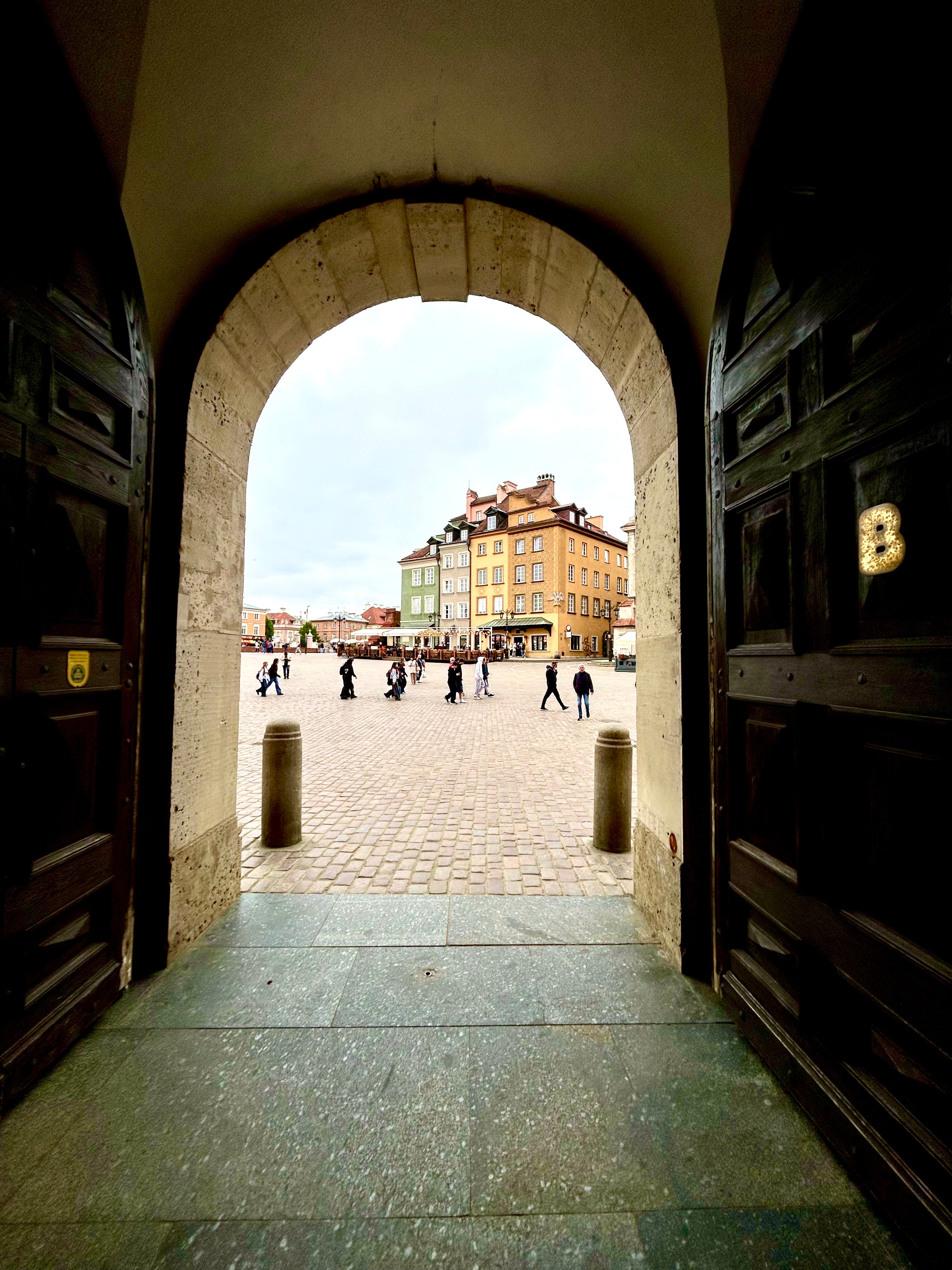
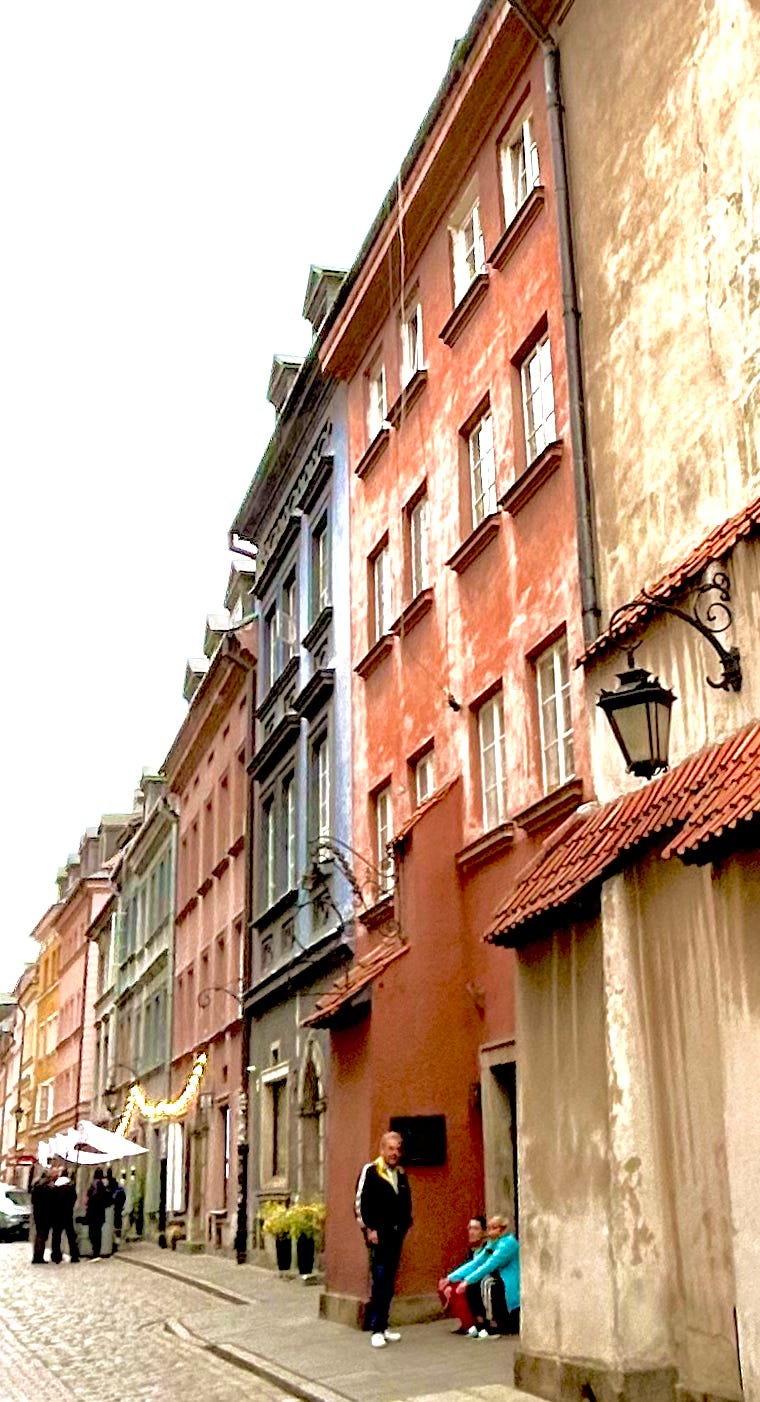
What struck me was the way the city sang—slow and somber, a wilting, whispering melody that sweeps over and under your feet like the soft spring wind. The melody matched the sun-soaked pastel buildings the way Easter garments match Good Friday. Peach-cream and sunset-pink, lemon-chiffon and Warsaw’s signature terracotta blend beautifully into the kind of aesthetic that enchants toddlers and tourists.
But the pastels won’t let you forget the crucifixion.
On the contrary, they are the cheery coloring that make Warsaw’s stone-cold monuments feel so stark.
When I walk alongside one of the primary highways I spot a towering statue that makes my heart stop. It’s a massive bronze sculpture of a woman rising up—or falling down—or perhaps both. Her head is lifted high and proud, though low to the ground, and her long stone tresses fly behind her. Her right hand clutches a glorious six-meter sword and her left arm is outstretched pleadingly toward the enemy. They call her the Warsaw Nike. She’s unclothed, defiled in every way, and yet defiant in every way too.
She is just one of many haunting stone sculptures in Warsaw who will not let the passions of the present obscure the presence of the past. Warsaw is still a defiled and defiant woman. She resists anyone who tells her otherwise. No conquering tourist or toddler has the power to forget. She will not be forgotten.
I move past her statue, past a dozen others, and find my way into the Warsaw Old Town, which is the world’s exemplar of a resilient city. 85% of the medieval city was demolished in 1944, but by 1945 it was already being reconstructed brick-by-brick—they restored the historic paintings, the stained glass, the pastels.
But reconstruction does not mean hiding the past.
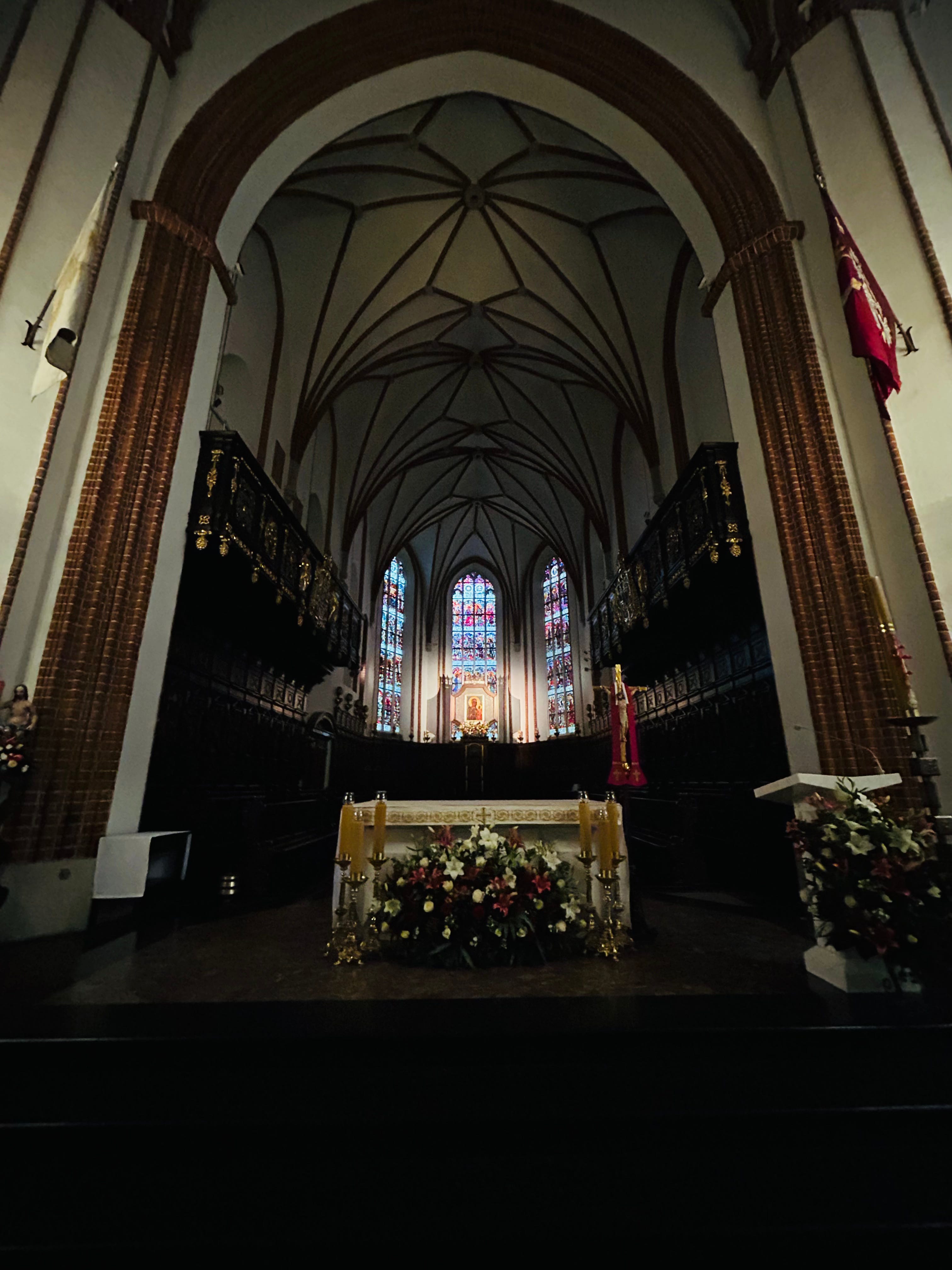
No. Steel figures with screams still on their lips greet those who step into Warsaw’s infamous Archcathedral—the same Archcathedral that had stood as a symbol of the city’s impregnable infrastructure and Polish culture since the 13th century; the same Archcathedral that had been a fortress for the Jews during the Warsaw Uprising; the same Archcathedral into which the Germans drove a remote-controlled tank filled with explosives. The Germans would then drill holes in the walls of this refuge and blow it to bits.
Warsaw reconstructed the Archcathedral. And Warsaw remembered the Archcathedral’s fall.
The two can, and must, be true at the same time.
The Church’s Amnesia.
It is doubtful there is any communal disorder so dangerous in the eyes of God as amnesia.
The word “remember” is used nearly two hundred times in the Bible, often as a word from God to the people, urging us to recall His scandalous faithfulness and our scandalous faithlessness.
Every festival, every feast, every fast, every fun and foul thing was attached to the memory of Israel. Memory was a core foundation on which God’s people are established:
“Then take care lest you forget the Lord, who brought you out of the land of Egypt, out of the house of slavery” (Deut 6:12).
This verse follows directly after the Shema, arguably the most famous passage in the Hebrew Bible:
“Hear, O Israel, the LORD your God is One; you shall love the LORD your God with all your heart, with all your soul, and with all your strength” (Deut 6:4-5).
This Scripture has been repeated every morning by the Jews for millennia. To recall the words of God was to call their identity into being. For the Hebrews, “hearing,” “obeying,” and “remembering” are interrelated concepts.
Perhaps God, in His infinite wisdom, knew that when a nation forgets its past, it actively forgets its present. When a people misplaces their history, they actively forget their identity. Amnesia and Alzheimer’s are peculiarly tragic not because they are peculiarly bodily debilitating, but because they are not. There sits the body of a person—the same person you know so well, and yet this loved one does not remember who they are…
They’ve forgotten who they love. They’ve forgotten who loves them. They’ve lost the story.
I wonder if the American church has lost our story.
Where are our monuments? Where are our stone-cold structures that tell our story?
“Do this in remembrance of me,” is most certainly at the core of Christianity—and all doing comes from the practice of remembering. And yet the Body of Christ has somehow forgotten even what it means to be Christ’s Body.
I cannot tell you the amount of times a Jesus-loving college student has somewhat bashfully asked me, “Why do I need the church?” It is not the sickness of rebellion which produces this question. It is the disorder of amnesia.
Christians would do well to learn from Warsaw.
In a world of amnesia, churches must hold the memories of our cities. Like Saint John’s in Warsaw; like Saint Sophia’s in Kyiv; like University Church in Oxford; like Sixth Avenue Baptist in Birmingham; like Hagia Sophia in Istanbul; like the Holy Sepulchre in Jerusalem—though our cities fall a thousand times over, we rebuild and remember.
After all, no other institution—not even marriage—can hold memories forever.
Though Warsaw was resurrected, it will be crucified again.
The only institution that will last into eternity is the people of God.
The Church alone will remember and be remembered.
Let’s learn to remember well.

And let’s be human y’all,
J.T.
Omg this AI voiceover is smooth as butter 😍🤤